KRAS MUTATION

KRAS Mutation — the most frequently mutated oncogene in human cancer was 'undruggable' for 40 years until sotorasib broke through. KRAS G12C inhibitors are now FDA-approved for lung cancer, with G12D inhibitors in clinical trials.

Whole genome sequencing evaluates all KRAS codon 12, 13, and 61 variants — G12C, G12D, G12V, G13D, Q61H — providing comprehensive KRAS profiling for targeted therapy eligibility across lung, colorectal, and pancreatic cancers.

CLIA CertifiedCAP AccreditedISO 15189 Medical LabACMG ClassifiedHIPAA & GDPR100,000+ Genomes Sequenced

About this condition

KRAS Mutation

KRAS (Kirsten rat sarcoma viral oncogene homolog, chromosome 12p12.1) is the most frequently mutated oncogene in human cancer — found in approximately 25% of all cancers, including ~30-40% of NSCLC (adenocarcinoma), ~40-50% of colorectal cancer, and ~90% of pancreatic cancer. KRAS mutations constitutively activate the RAS-RAF-MEK-ERK signaling pathway, driving cell proliferation. For four decades, KRAS was considered 'undruggable' due to the protein's smooth surface lacking a druggable binding pocket.

Sotorasib (Lumakras, FDA 2021) was the first drug to successfully target KRAS — specifically the G12C mutation (glycine to cysteine at position 12). Sotorasib exploits the unique cysteine at position 12 to covalently and irreversibly bind KRAS G12C in its inactive GDP-bound state, locking the protein off. KRAS G12C is found in approximately 13% of NSCLC (adenocarcinoma), 3% of CRC, and 1-2% of other cancers. Adagrasib (Krazati) is a second FDA-approved KRAS G12C inhibitor with longer half-life and CNS penetration.

The KRAS revolution is expanding beyond G12C. KRAS G12D inhibitors (MRTX1133 and others) are in clinical trials — critically important because G12D is the most common KRAS mutation across all cancers (representing ~36% of KRAS-mutant pancreatic cancer). G12V and other codon inhibitors are in preclinical development. Additionally, KRAS mutation status determines anti-EGFR antibody eligibility in CRC — KRAS-mutant CRC does NOT respond to cetuximab or panitumumab, making KRAS testing mandatory before anti-EGFR therapy.

KRAS-mutant CRC does NOT respond to anti-EGFR antibodies (cetuximab, panitumumab) — testing is MANDATORY before prescribing. Giving anti-EGFR therapy to a KRAS-mutant patient wastes time and money while delaying effective treatment.

Gene locus
KRAS (12p12.1)

KRAS testing determines targeted therapy eligibility (sotorasib/adagrasib for G12C), anti-EGFR antibody exclusion (all KRAS mutations in CRC), and clinical trial access (G12D inhibitors). WGS identifies all KRAS variants comprehensively.

KRAS G12D inhibitors are in clinical trials — the most important codon for pancreatic cancer treatment

KRAS G12D is the most common KRAS mutation in pancreatic cancer (~36%) and is found in ~9% of NSCLC and ~12% of CRC. MRTX1133 and other G12D-specific inhibitors are in early clinical trials. Establishing KRAS G12D status now — through WGS — enables rapid trial enrollment as these therapies advance through development. For pancreatic cancer patients with limited treatment options, clinical trial access can be life-extending.

Sotorasib and adagrasib produce responses in previously untreatable KRAS-mutant NSCLC — molecular testing identifies eligible patients

KRAS G12C NSCLC was previously treated with standard chemotherapy and immunotherapy without a targeted option. Sotorasib produces ~37% response rate and adagrasib ~43% in previously treated KRAS G12C NSCLC — meaningful responses in a patient population that has exhausted standard therapies. Without KRAS molecular testing, these patients never receive the targeted therapy they're eligible for.

One test. A lifetime of answers.

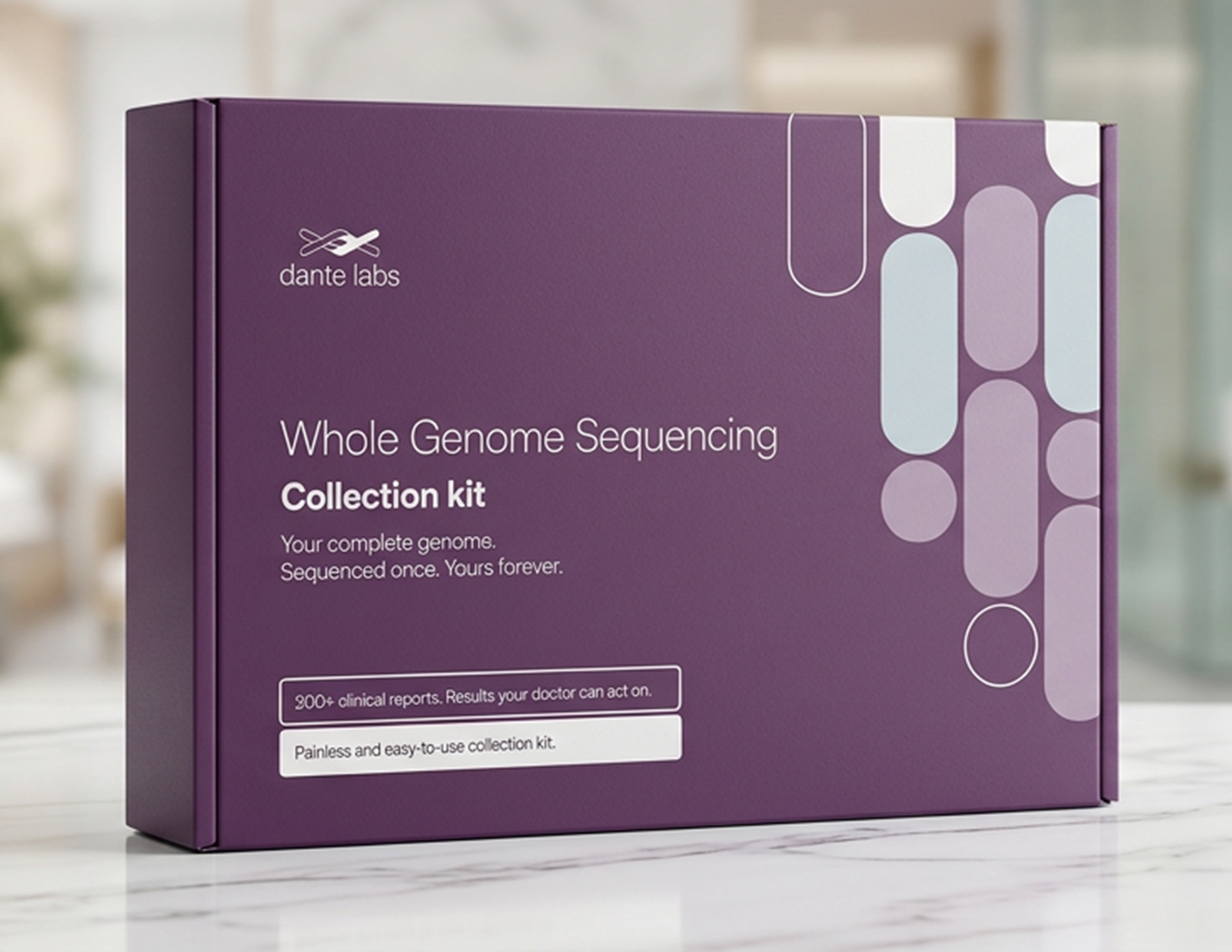
One kit, sent to your home. Your entire genome sequenced at the clinical standard used for diagnostic decisions. 200+ physician-ready reports delivered to your Genome Manager in 6–8 weeks — permanent and updated as science advances.

From $449

Ships within 48 hours · Results in 6–8 weeks