TAY-SACHS DISEASE

Tay-Sachs Disease — a fatal neurodegenerative condition preventable through carrier identification, where the difference between a carrier and a pseudodeficiency allele determines the accuracy of the reproductive risk estimate.

Whole genome sequencing reads the complete HEXA gene, resolving pseudodeficiency alleles from true pathogenic variants — the distinction that enzyme-based carrier screening cannot reliably make.

CLIA CertifiedCAP AccreditedISO 15189 Medical LabACMG ClassifiedHIPAA & GDPR100,000+ Genomes Sequenced

About this condition

Tay-Sachs Disease

Tay-Sachs disease is an autosomal recessive lysosomal storage disorder caused by pathogenic variants in the HEXA gene on chromosome 15q23, which encodes the alpha subunit of the hexosaminidase A (Hex A) enzyme. Deficiency of Hex A leads to progressive accumulation of GM2 ganglioside in neurons, resulting in neuronal cell death. The infantile form — the most common and most severe — presents at 3-6 months of age with developmental regression, exaggerated startle response, progressive neurological deterioration, and a cherry-red macular spot on fundoscopic examination. Infantile Tay-Sachs is uniformly fatal, typically by age 4-5 years. There is no effective treatment.

Tay-Sachs carrier frequency varies substantially by ancestry. Ashkenazi Jewish populations have the highest carrier rate at approximately 1 in 30, but elevated carrier frequencies also occur in French-Canadian, Cajun, and Irish populations. Pan-ethnic carrier frequency is approximately 1 in 250-300. Three common HEXA pathogenic variants account for over 98% of disease alleles in Ashkenazi Jewish carriers: a 4-bp insertion in exon 11 (c.1274_1277dupTATC), a splice site variant in intron 12 (c.1421+1G>C), and a missense variant in exon 7 (p.Gly269Ser, which causes the adult/chronic form). Non-Jewish populations carry a much broader spectrum of rare HEXA variants.

Late-onset Tay-Sachs (juvenile and adult/chronic forms) results from HEXA variants that reduce but do not eliminate residual Hex A activity. Adult-onset Tay-Sachs can present with progressive cerebellar ataxia, proximal muscle weakness, cognitive decline, and psychiatric symptoms — a presentation that may initially be misdiagnosed as spinocerebellar ataxia or motor neuron disease. HEXA pseudodeficiency alleles (particularly p.Arg247Trp and p.Arg249Trp) produce reduced Hex A activity on enzyme assay without causing disease, creating false-positive results on enzyme-based carrier screening that generate unnecessary anxiety and can lead to incorrect reproductive risk counseling.

Infantile, juvenile, and adult/chronic forms represent a continuum of residual Hex A activity. Pseudodeficiency alleles produce enzyme assay results indistinguishable from true carrier status — only molecular genotyping differentiates them.

Gene locus
HEXA (15q23)

Enzyme-based carrier screening cannot distinguish pseudodeficiency alleles from true pathogenic variants, and standard panels miss rare non-Ashkenazi HEXA variants. Complete HEXA genotyping is the only way to resolve ambiguous results.

Pseudodeficiency alleles create false-positive carrier results that only molecular testing can resolve

HEXA pseudodeficiency alleles reduce hexosaminidase A activity on standard biochemical assay without causing disease. The most common — p.Arg247Trp and p.Arg249Trp — are found at allele frequencies of approximately 2-4% in non-Jewish populations. When enzyme-based screening identifies a reduced Hex A level, the result is reported as 'carrier' regardless of whether the reduced activity is from a pathogenic allele or a pseudodeficiency allele. Molecular genotyping is required to distinguish the two — a pseudodeficiency carrier has zero reproductive risk for Tay-Sachs, while a true carrier paired with another carrier has a 25% chance per pregnancy. Whole genome sequencing resolves this ambiguity by reading the complete HEXA coding and intronic sequence.

Non-Ashkenazi populations carry rare HEXA variants not on standard three-variant panels

Standard Ashkenazi Jewish carrier panels test for the three common HEXA pathogenic variants that account for >98% of disease alleles in that population. These panels have poor sensitivity in non-Ashkenazi populations, where over 100 different rare HEXA pathogenic variants have been documented. As carrier screening expands beyond targeted ethnic panels to pan-ethnic approaches, a fixed-content variant panel cannot capture the full diversity of HEXA pathogenic alleles across all ancestries. Whole genome sequencing reads every nucleotide of the HEXA gene, providing equivalent sensitivity regardless of the patient's ethnic background.

One test. A lifetime of answers.

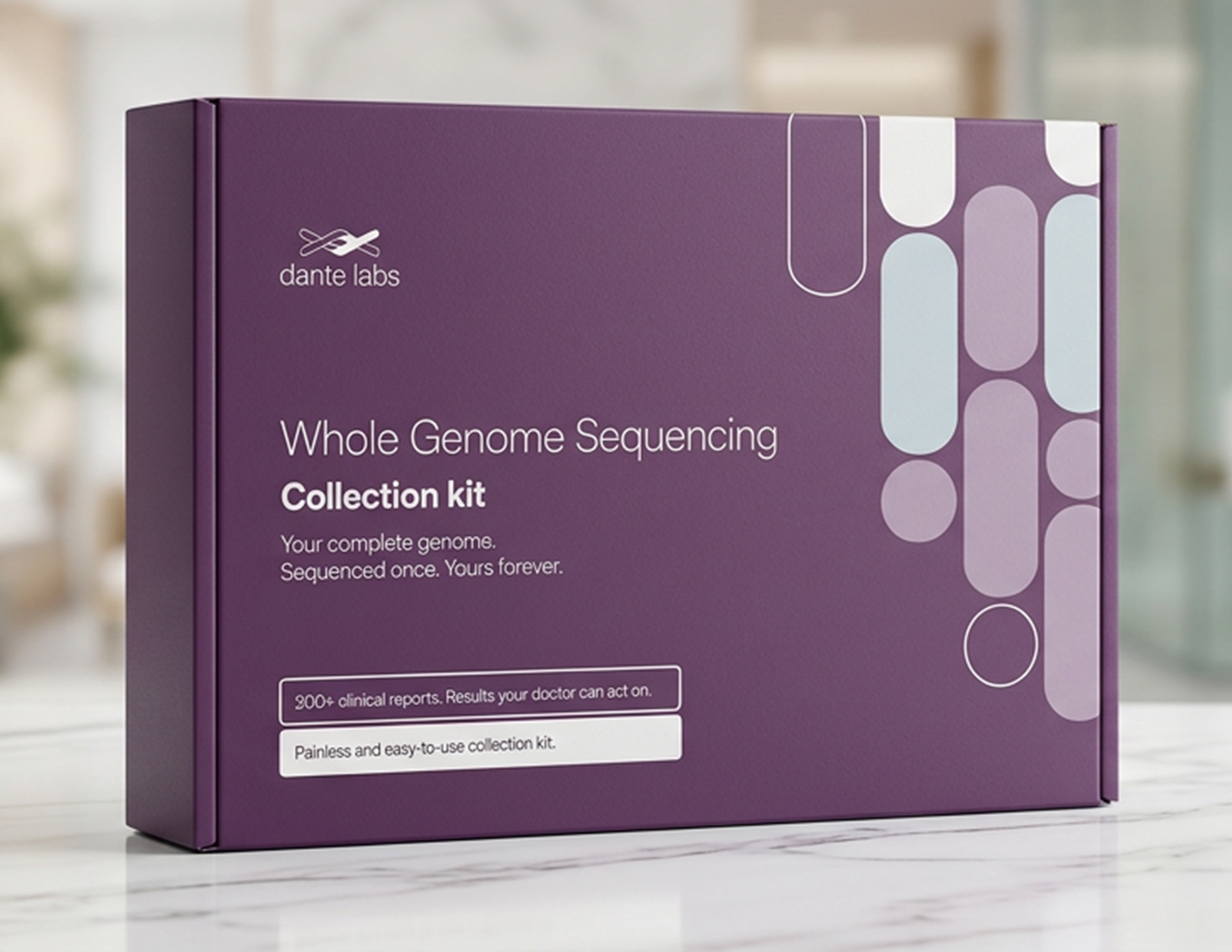
One kit, sent to your home. Your entire genome sequenced at the clinical standard used for diagnostic decisions. 200+ physician-ready reports delivered to your Genome Manager in 6–8 weeks — permanent and updated as science advances.

From $449

Ships within 48 hours · Results in 6–8 weeks